
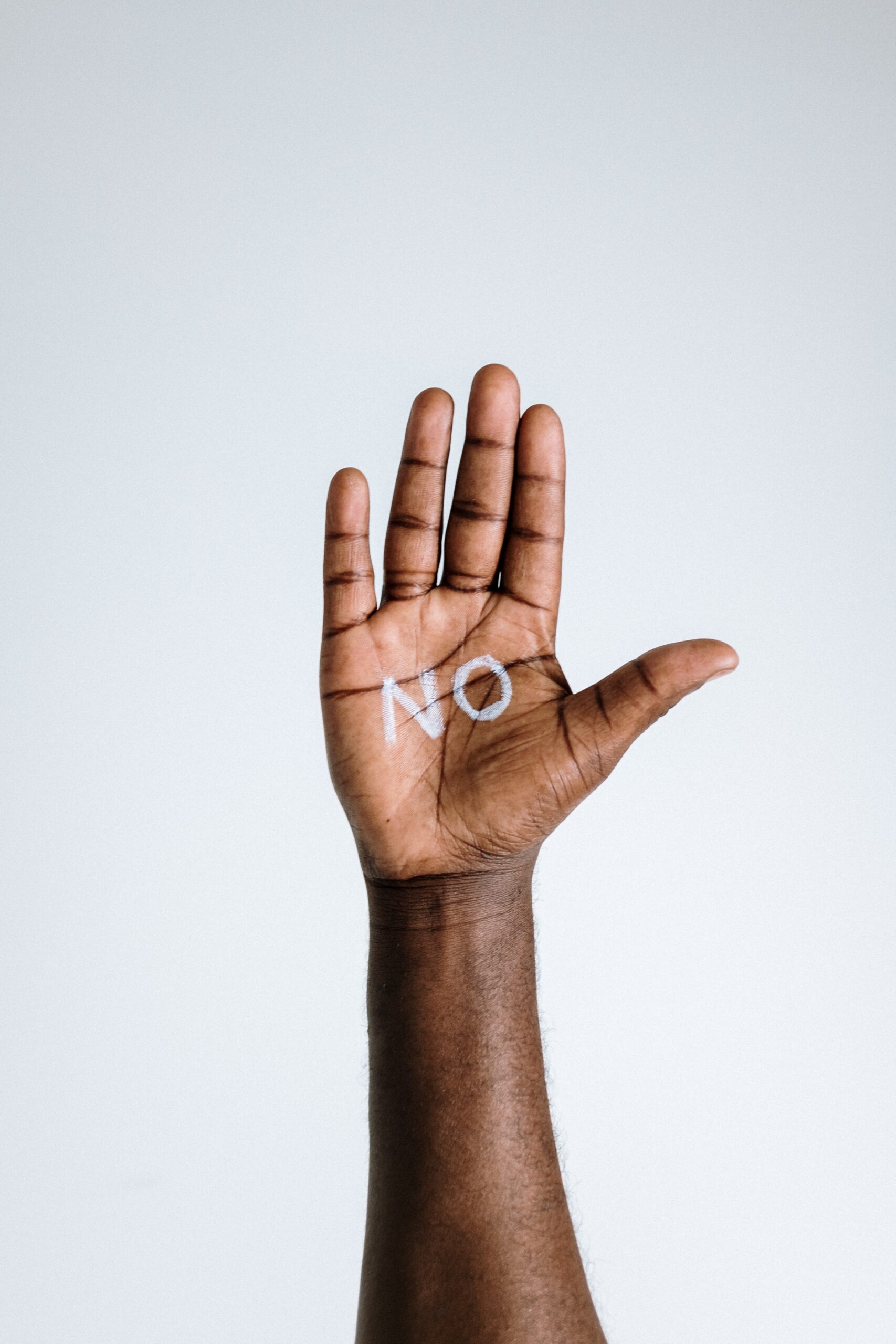
3 good reasons why saying ‘no’ is difficult
- No is a very very short word. It can also be one of the most difficult words to say because it is loaded with so much meaning and emotion. So often we avoid saying no and we take the ‘easy option’ and agree to things that we would rather not do, we keep quiet and then inevitably we feel bad about it later!
2. As humans we like to be liked, we like to conform and we strive to be approachable, co-operative and popular. And that’s why it goes against our basic instincts to say ‘no’ to parents, friends, neighbours, our boss, the list goes on. As children we learned to do as we were told – it simply wasn’t the done thing to disagree, especially with parents and teachers. After all, they knew best!
Then once we reached adulthood we may have found ourselves trapped in a pattern of ‘yes’ behaviour that was hard to break out of. It takes courage and forethought (and practice) to say no to an authority figure – eg a boss, simply because we haven’t previously been trained to be assertive and to find the right words to disagree respectfully.
3. ‘No’ can be controversial, inflammatory, argumentative, defensive and dividing. It can make us feel guilty, coerced, angry and any number of unwanted emotions. This is due to the fact that we associate it with negativity, even though it can actually open up endless possibilities! Guilt can kick in if we have previously been seen as someone who usually goes with the flow and agrees with people. It doesn’t feel or sound right to suddenly become the person who disagrees. This is simply about learning new ways to assert ourselves and to disagree without violating the rights of others.
But here’s the thing….’no’ can also be liberating, galvanising and powerful. When we learn to say no to the right things in the right way we free up more time, relieve stress and open ourselves up to a world of possibilities where we exercise our rights and our choices.
10 factors to consider when saying no
- Stay calm, keep your voice slow and steady
- Consider the reasons why you want to say no. Would saying yes make you feel uncomfortable, scared or unsure? And would that necessarily be a bad thing?
- Say what you mean and mean what you say. Being consistent is important for building trust, so if you say no to one person you may have to say the same to another.
- Weigh up the situation – it might be better to say yes if it means you protect a relationship or strengthen your position in a negotiation
- Always refuse to do something that would compromise your values or conflict with your moral code
- Clarify your boundaries and your rights – be clear where and when it is appropriate to say no
- Most of the time it is effective to explain the reasons why you are disagreeing. ‘Because’ is a powerful word and people like to hear it.
- Pause – take time to consider the request. Is your response an immediate reaction or a well thought-out response?
- Ask yourself if saying yes is an automatic response. Do you agree to things you really don’t want to do just because you don’t want to upset others? If so there might be situations where it would benefit you to
- Ditch the guilt! Set expectations and stick to them
If you’d like any more information on how to assert yourself, free up more time and feel less pressured just Get in touch. I promise I won’t say no!
